


Chapter 25 Lecture 24 - Perturbation Theory
25.1 The Quantum Mechanics of Real Systems
We can find exact analytical solutions to
-
the infinite square well
- the harmonic oscillator ( V(x)µ x2 )
- the comlomb potential ( V(x)µ -1/r )
However these are more or less the only analytical solutions we can obtain.
Although main systems can be approximated to the three analytical solutions we still need to be able to call upon procedures to obtain more accurate solutions to real systems. We can solve these problems through one of two methods
-
use a numerical integration of Schrödinger's Equation (via the use of supercomputers)
- use a systematic approximation method, this is whats called Perturbation Theory
H=H0+V' (25.1)
H0 is exactly soluble giving us the zero order solutions whilst V' is a small perturbation. For example
where H0 is represented by -2/2md2/dx2+a x2 (this is where the real system can be approximated to a hormonic oscillator) and V' is represented by b x3 .
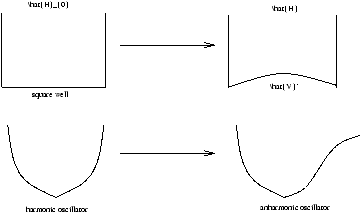
Figure 24.1 - Application of Perturbation Theory to a Real System
25.2 Perturbation Theory
Solutions to H are built iteratively from solutions to H0 . This is sensible since the eigenstates of H0 form a complete set.
H0Un=En0Un (25.2)
we now say that each eigenvalue En0 is associated with a single state Un (non-digenerate).
We will now write
V'=lH(r) (25.3)
where V(r) is a form of the potential that has been normalised whilst l is the strength of interaction (the scaling factor).
H=H0+lV(r) (25.4)
our procedure works best if l is very small.
The eigenstates of H are labeled Yn and the eigenvalues of H are labeled En .
Formally we can write these as a power series in l
Yn=Yn(0)+lYn(1)+l2Yn(2)+... (25.5)
En=En(0)+l En(1)+l2En(2)+... (25.6)
since l<<1 there rapidly converge. The zero order solutions can be equated to the unperturbed system
Yn(0)=Un En(0)=En(0) (25.7)
Schrödinger's Equation
HYn=EnYn
|
|
( |
H0+l V(r) |
) |
[ |
Fn(0)+lYn(1)+l2Yn(2)+... |
] |
= |
[ |
En(0)+l En(1)+l2En(2)+... |
] |
[ |
Yn(0)+lYn(1)+Yn(2)+... |
] |
(25.8) |
order lÞ V(r)Un+H0Yn(1)=En(1)Un+En0Yn(1) (25.9)
order l2ÞV(r)Yn(1)+H0Yn(2)=En(2)Un+En(1)Yn(1)+En0Yn(2) (25.10)
To proceed Yn(1) (or Yn(2) ) can be expanded in terms of the eigenstates of H0
If this is substituted into equation V.38 and we apply the procedure for using orthogonality to elimate most of the terms òall spaceUj*dV we obtain for j=n the first order energy shift
|
D En(1)=l En(1)=l |
ó
õ |
|
Un*(r)V(r)Un(r)dV=l <n|V|n> (25.12) |
En~ En0+D En(1)+Dn(2) (25.15)