Previous Contents Next

Chapter 4   Electromagnetic Waves in a Dielectric

4.1   Electromagnetic Waves in HIL Dielectrics

An HIL dielectric has the following properties
D=eE
BH
usually µ =µ0
rf=0,  jf=0
Maxwell's equations are
Ñ .E=0 Ñ .H=0 Ñ×E=-µ
H
t
Ñ×H=e
E
t
    (4.1)
this is similar to a vacuum where
Ñ2Ee
2E
t2
    (4.2)
the properties are idential to the vacuum situation except for
w
k
=cm=
1
µe
<c     (4.3)
we define the refractive index as
n=
c
cm
>1     (4.4)
we note that

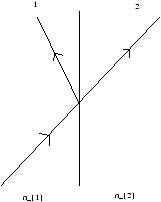
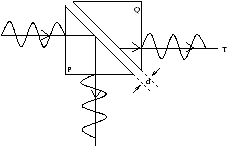
Figure 4.1 - Maxwell's Equations at Boundaries

4.2   Boundary Conditions at the Interface of Two Dielectrics

Consider a plane interface between two HIL dielectrics labelled 1 and 2. The notation used will be n to indicate that it is normal to the boundary and t means that it is tangential to the boundary.
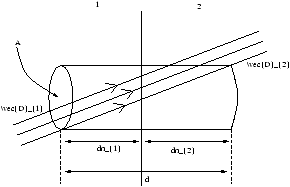
  1. Gauss' Law ( Ñ .D=0 ), we use D because e changes across the boundary and so at the boundary the equations are not being applied to a HIL material.

    Figure 4.2 - Gauss' Law at a Boundary
    consider a pill box lying in the plane of the boundary, length d and of area A .
    D.dS=0
    if we now let d® 0 then we obtain
    (Dn1-Dn2)A=0
    so
    Dn1=Dn2     (4.5)
    from this we find that the normal component of D is continuous
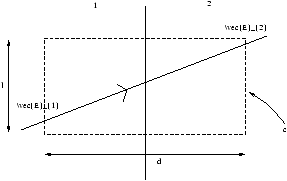
  2. Faraday's Law ( cE.dl=-/ tòB.dS )

    Figure 4.3 - Faraday's Law at a Boundary
    if we let d® 0 then the right-hand-side also tends to zero and so we obtain
    (Et1-Et2)l=0
    and so in general
    Et1=Et2     (4.6)
  3. No Monopoles ( Ñ×B=0 )
    Þ Bn1=Bn2     (4.7)
  4. Ampere-Maxwell Equation
    Ht1=Ht2     (4.8)

4.3   The Laws of Optics (Reflection and Refraction)

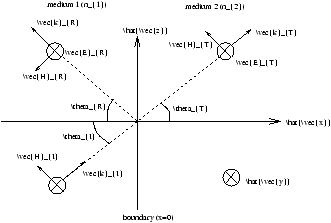
Consider a plane, sinusoidal electromagnetic wave incident on a plane interface.

Figure 4.4 - Reflected and Refracted Waves
There are three waves in figure 4.4
  1. Incident Wave
    EI=E I0e
    (kI.r-wIt)
     
    we set
    kI=(kIx,0,kIz)
    this means it lies in the x-z plane
  2. Reflected Wave
    ER=E R0e
    (kR.r-wRt)
     
  3. Transmitted Wave
    ET=E T0e
    (kT.r-wTt)
     
k.r=kxx+kzz
and also
H=
k×E
wµ
we need to relate EI , ER and ET across the body, this can be in a number of steps
  1. apply equation 4.6 with boundary conditions at x=0
    (EI+ER)t=(ET)t
    or
    E I0e
    [(kI-kT).r-(wI-wT)t]
     
    +E R0e
    [(kR-kT).r-(wR-wT)t]
     
    =(ET0)t=(constant)
    so
    wI=wR=wI=w     (4.9)
    this shows that there is no frequency change. We also obtain that
    kI.r=kR.r=kT.r  (at x=0)     (4.10)
  2. kI.r=kR.r at x=0 so that kIz=kRz . We have that w2=kR2c2=kI2c2 so we obatin kR2=kI2 and kRx2=kIx2 . So we conclude kRxkIx . When a minus sign is used is provides the reflection
    kI=kIxx+kIzz
    kR=-kIxx+kIzz
    we now define an angle of incidence and reflection (as shown in figure 4.4)
    sinqI=
    kIz
    kI
    sinqR=
    kRz
    kR
    hence
    qI=qR     (4.11)
    [(angle of incidence)=(angle of relection)]
  3. we have that kI.r=kT.r and also at the boundary x=0
    kIz=kTz     (4.12)
    so we write this as
    kIsinqI=kTsinqT
    kI2=
    w2
    c12
    =
    w2
    c22
    c22
    c12
    =kT2
    n12
    n22
    where c1 is the speed of light on side one and c2 is the speed of light on side two. So
    kT
    n2
    n1
    kI
    we take the positive side and obtain
    n2sinqT=n1sinqI     (4.13)
    this is known as Snell's Law.

4.4   Fresnel Equations - Incident Electric Field Is Normal to The Plane of Incidence

As the freqency does not change as the electric field is in the y direction.
  1. Incident Wave
    EI=E I0e
    (kI.r-w t)
     
  2. Reflected Wave
    ER=E R0e
    (kR.r-w t)
     
  3. Transmitted Wave
    ET=E T0e
    (kT.r-w t)
     
We calculate the magnetic field as
H=
k×E
Z
  (classwork three)
if we supress the exponentials
HI=
kI×EI
Z1
=
EI0
Z1
(kI×y)
HI=
EI0
Z1
(cos(qI)x+sin(qI)zy
HI=
EI0
Z1
(-sin(qI)x+cos(qI)z)
HR=
ER0
Z1
(-sin(qI)x-cos(qI)z)
this is because qI=qR and that the wave is propagating in the x direction
HT=
ET0
Z2
(-sin(qT)x+cos(qT)z)
we now apply equation 4.8 and the boundary conditions at x=0
(HI+HR)t=(HT)t

If we consider the z component of the boundary conditions at x=0 then we obtain (with the exponentials supressed)
EI0
Z1
cosqI-
ER0
Z1
cosqI=
ET0
Z2
cosqT     (4.14)
by using Faraday's Law (equation 4.6) gives
EI0+ER0=ET0
combine to get the reflected wave
ER0
EI0
=
Z2cosqI-Z1cosqT
Z2cosqI+Z1cosqT
    (4.15)
and the transmitted wave
ET0
EI0
=
2Z2cosqI
Z2cosqI+Z1cosqT
    (4.16)
these are the Fresnel Equations. Outcomes of these equations are
  1. if µ =µ0 then Z1/Z2=n1/n2 and so we obtain
    ER0
    EI0
    =
    n1cosqI-n2cosqT
    n1cosqI+n2cosqT
        (4.17)
    ET0
    EI0
    =
    2n1cosqI
    n1cosqI+n2cosqT
        (4.18)
  2. if n1cosqI<n2cosqT then the reflected wave has a p phase shift
  3. the phase of the transmitted wave does not change

4.5   Reflection and Transmission

Define the reflection as ( R )
R=
<power per unit area>reflected
<power per unit area>incident
R= ½
½
½
½
<NR>.n
NI>.n
½
½
½
½
<N>=
E02
2Z
k  (handout 4)
R=
æ
ç
ç
è
ER02
2Z1
ö
÷
÷
ø
cosqI
æ
ç
ç
è
EI02
2Z1
ö
÷
÷
ø
cosqI
=
ER02
EI02
    (4.19)

We now do the same for the definition of the transmission
T=
<power per unit area>transmit
<power per unit area>incident
T=
æ
ç
ç
è
ET02
2Z2
ö
÷
÷
ø
cosqT
æ
ç
ç
è
EI02
2Z1
ö
÷
÷
ø
cosqI
= æ
ç
ç
è
Z1
Z2
ö
÷
÷
ø
ET02cosqT
EI02cosqI
    (4.20)
also we not that
T+R=1


4.6   Total Internal Reflection and the Evanescent Wave

Consider n2<n1 , Snell's Law is
sinqT=
n1
n2
sinqI
define
qC=sin-1
æ
ç
ç
è
n2
n1
ö
÷
÷
ø
if qI>qC then we get total internal reflection. However we have (from equation 4.12) that kIz=kTz and (from section 4.3) kI2=kT2(n1/n2)2 we get
kT2=kTx2+kIz2= æ
ç
ç
è
n2
n1
ö
÷
÷
ø
2


kI2
kTx2= æ
ç
ç
è
n2
n1
ö
÷
÷
ø
2


kI2-kIz2
kTx2= æ
ç
ç
è
n2
n1
ö
÷
÷
ø
2


kI2 æ
ç
ç
ç
ç
ç
è
1- æ
ç
ç
è
n1
n2
ö
÷
÷
ø
2


ö
÷
÷
÷
÷
÷
ø
sin2qI
however if (n1/n2)2sin2qI>1 then kTx is complex, so we write
kTx= |kTx|
so the electric field of the transmitted wave is
E T=ET0e
(kTz-w t)
 
e
-|kTx|xy
 
    (4.21)
where e (kTz-w t) is the oscillating part and e-|kTx|xy and if ET is non-zero then we have a evanescant wave.

Figure 4.5 - Total Internal Reflection
comments on the outcomes of total internal reflection

4.7  

SEE HANDOUT 5 ????

4.8  

SEE HANDOUT 6 ????
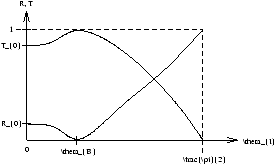
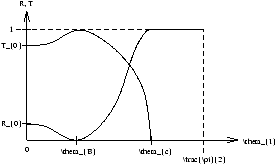
NOTE: The Brewster angle is represented by qB

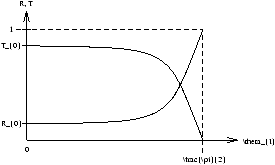
Figure 4.9 - Distibution of Tranmitted/Reflected Light, Magnetic Hy (for n2>n1 )

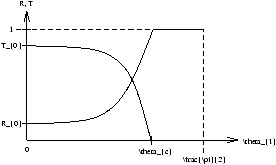
Figure 4.10 - Distibution of Tranmitted/Reflected Light, Magnetic Hy (for n2<n1 )

Previous Contents Next