


Chapter 6 Lecture 6 - States and Wave Functions
6.1 States of a Quantum System
6.1.1 Quantum Eigenstates
A quantum system can be in an eigenstate of some operator - in this case a measurement of the observable yields a definite value.

Figure 6.1 - A Two Level Atom (Two Energy Eignenstates)
If the system in figure 6.1 is prepared so that it is in state U1 then an energy measurement will always give the value E1 .
6.1.2 Quantum Superposition States
A quantum system can be in a state Y that is a superposition of eigenstate.
Example 1 - Superpositions of Eigenstates in a Two Level Atom
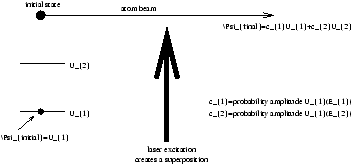
Figure 6.2 - Superpositions of Eigenstates in a Two Level Atom
The properties are
-
Yinitial is an eigenstate E® E1
-
Yfinal=c1U1+c2U2 (6.1)
A superposition of eigenstates of E , probabilities of measuring E1+E2 are
P(E1)=|c1|2 P(E2)=|c2|2 (6.2)
Imagine making many measurements of identically prepared systems we predict
<E>=å |cn|2an=|c1|2E1+|c2|2E2 (6.3)
where <E> is the weighted mean, |cn|2 is the probability Un and an is the eigenvalue.
So the expectation value ( <E> ) of the measurement.
In an experiment ( N measurements are made), then
-
E1 is measured N1 times
- E2 is measured N2 times
Example 2 - Eigenstates of a Position Measurement
A system is prepared in a state partially localized in x (to be consistent with D xD px/2 ).
We can consider this state as a superposition of an infinite number of position eigenstates X(x') (Dirac Delta Functions)

Figure 6.3 - Eigenstates of a Position Measurement (Dirac Delta Functions)
the probability of x'
P(x'® x'+dx)=|A(x')|2dx (6.4)
where |A(x')|2 is the probability density
A(x)ºY(x)
ie. the wavefunction is equivalent to a superposition of eigenstates of position.
6.2 Wavefunctions
Postulate B stated that the wavefunction Y (x,y,z,t) represents the probability amplitude for a position measurement at time t to find the particle at the location defined:
x® x+dx, y® y+dy, z® z+dz
So we can say
P(in volume elemental dV)=Y*(x,y,z,t)Y(x,y,z,t)dV=|Y(x,y,z,t)|2dV (6.5)
|
P(in volume V)= |
ó
õ |
|
|Y(x,y,z,t)|2dV (6.6) |
|
|
ó
õ |
|
Y*(x,y,z,t)Y(x,y,z,t)dV=1 (6.7) |
Y(r,t)=Cy (r,t)
| |C|2 |
ó
õ |
|
y*(r,t)y (r,t)dV=1 |
6.2.1 A One Dimensional Example
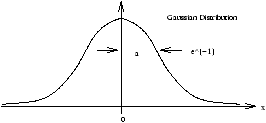
Figure 6.4 - One Dimensional Wavefunction